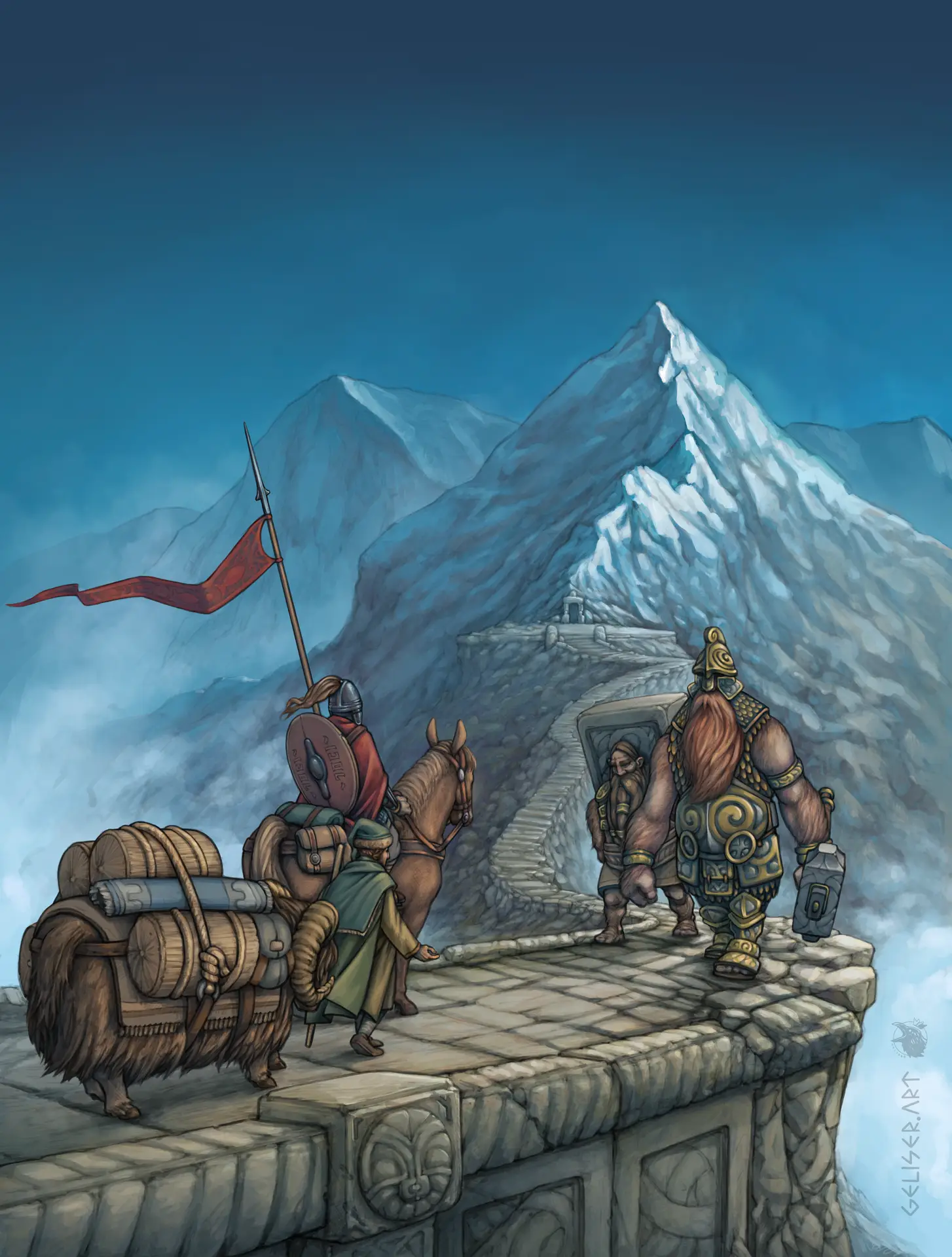
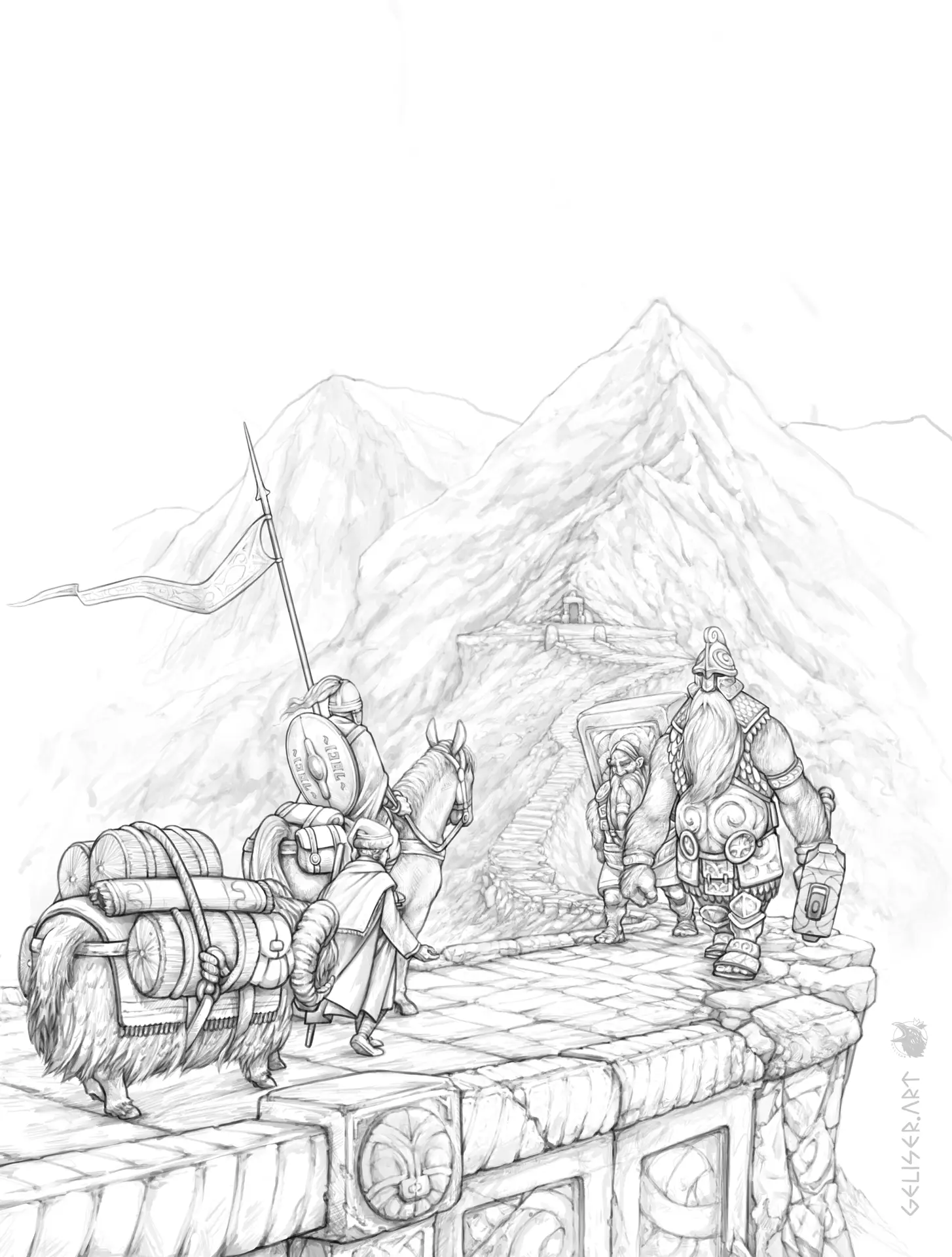
The Jottstain Mountains form an extensive system of ranges that traverse and divide the continent into multiple regions. The territory comprises a multitude of individual peaks, ridges, mountain chains, and plateaus. While colloquially referred to collectively as «the Jottstain Mountains,» the area is technically a complex, diverse mountain system spanning thousands of kilometers, home to a wide variety of peoples dwelling within its valleys. The most significant and renowned of these groups is Utgard—a vast confederation of Giant clans and the oldest kingdom in our history. This ancient society pioneered architectural techniques never before seen or replicated, capable of liquefying stone to raise immense domes within cavern interiors. Among their many marvels are the «Passes»: vast networks of roads, bridges, and tunnels that cut through the mountains, connecting areas that would otherwise remain isolated. The earliest Passes date back to the Age of Myths, a time when Giants ruled the continent and humans struggled for survival. Over the centuries, subsequent generations of Giants—sometimes with the cooperation of the Eligians and Faenir—carried out various renovations and expansions.
Jottstain is virtually impregnable, and traversing it demands great effort and expertise. Consequently, the merchants, knights, and porters who venture into these great mountains are often veterans of the journey; they are intimately familiar with the intricate web of tunnels, bridges, and winding paths, as well as the proper etiquette for dealing with the Giants who guard them. As a result, the flow of trade—while frequent—is not particularly heavy, given that many communities rely heavily on these links to other civilizations for the import of essential goods. Among the most significant exchanges is that of bronze and iron. Eligia was always a land rich in copper and—until about a century ago—tin. The Inlands, however, possess vast quantities of tin; while this resource popularized the trade route, it later paved the way for the iron trade—involving a mineral that is far cheaper and easier to work with, and which has recently been introduced to the human lands of the south, offering new technological opportunities for their people.